

LibreChat: The "Free" AI Super-Interface You Have to Build Yourself
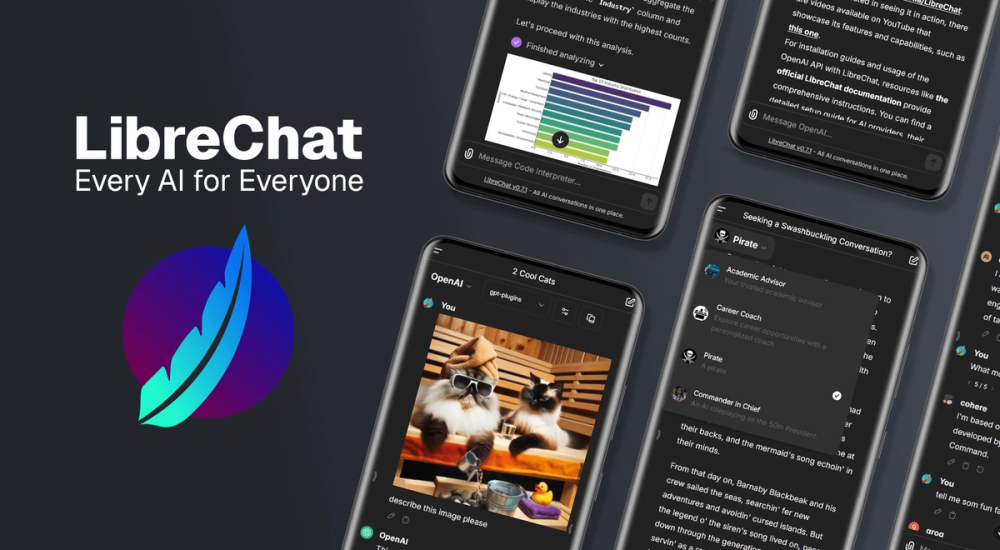
You know how streaming services are annoying because you have to switch between Netflix, Hulu, and HBO to find what you want? LibreChat is like building your own universal TV that plays everything in one place. It’s an open-source, web-based interface that looks almost identical to ChatGPT, but it lets you plug in the "brains" of every major AI (GPT-4, Claude 3.5, Gemini, or even free local models) into a single, private dashboard.
The "free" reality is tricky here: the software itself is 100% free forever with zero monthly fees, but unlike ChatGPT, it doesn't come with the AI "included"—you have to bring your own API keys or local models.
🎨 What It Actually Does
- Unified Model Switcher: [Connects OpenAI, Anthropic, Google, etc.] – You can start a chat with GPT-4, realize it’s being dumb, and switch to Claude 3.5 Sonnet mid-conversation without losing context.
- Conversation Branching: [Edit and Fork messages] – You can go back to a previous message, edit it, and split the conversation into a new timeline. It’s like "Save Scumming" in a video game to get the best possible outcome.
- Local & Private: [Self-Hosted Architecture] – Your data lives on your computer or your private server. No Big Tech company is training their next model on your weird 3 AM philosophical questions unless you let them.
- Plugins & Artifacts: [Code Interpreter, Search, Custom Tools] – It mimics ChatGPT’s advanced features (like analyzing spreadsheets or rendering code previews) but gives you control over exactly which tools are active.
The Real Cost (Free vs. Paid)
Here is the brutal truth: LibreChat is free like a puppy is free. The initial acquisition costs nothing, but you need to feed it. You are not paying a subscription to LibreChat; you are paying for the intelligence you pipe into it (via API keys) or the electricity to run it locally.
| Plan | Cost | Key Limits/Perks |
|---|---|---|
| Self-Hosted (Local) | $0 / month | Limit: Your computer's speed. Perk: Totally private, works offline with tools like Ollama. |
| Self-Hosted (API) | Pay-per-use | Limit: Your wallet. Perk: Access top-tier models (GPT-4) often 50% cheaper than a $20/mo sub. |
| Code Interpreter | Free (Tier) | Limit: 750 executions/month for the optional Code Interpreter API plugin. |
The Catch: There is no "Sign Up" button. You cannot just visit a website and start typing. You (or a tech-savvy friend) must install it using tools like Docker. If words like "Terminal," "Git," or "Env Variables" scare you, this tool is effectively "unavailable" to you. Also, because it's self-managed, if it breaks, you are customer support.
How It Stacks Up
- Open WebUI: The biggest rival. It is generally easier to set up for offline local models (using Ollama) and feels slightly more modern out of the box. LibreChat is better if you want a polished, ChatGPT-like clone that handles multiple paid cloud APIs (OpenAI/Anthropic) gracefully.
- TypingMind: This is the "Apple" version. It does exactly what LibreChat does (bring your own keys), but it’s a paid, polished product you don't have to install. You pay them $39+ once to avoid the headache of coding/installation.
- ChatGPT Plus: The default. You pay $20/month for convenience. LibreChat replaces this subscription if you are willing to do the legwork, potentially saving money if you aren't a heavy user.
The Verdict
LibreChat represents a shift from "renting" intelligence to "managing" it. It is the "Linux" of the AI world: slightly intimidating to set up, but once it’s running, it gives you a sense of god-like control that simple chat apps can’t touch.
If you are tired of monthly subscriptions and want to see exactly what you’re paying for—or if you just want to feel like a hacker commanding a fleet of super-intelligences from a single dashboard—this is the future. For the average user, it’s a headache; for the power user, it’s home.


